
“There is one way of breathing that is shameful and constricted. Then, there’s another way: a breath of love that takes you all the way to infinity.”
– Rumi, 13th century poet
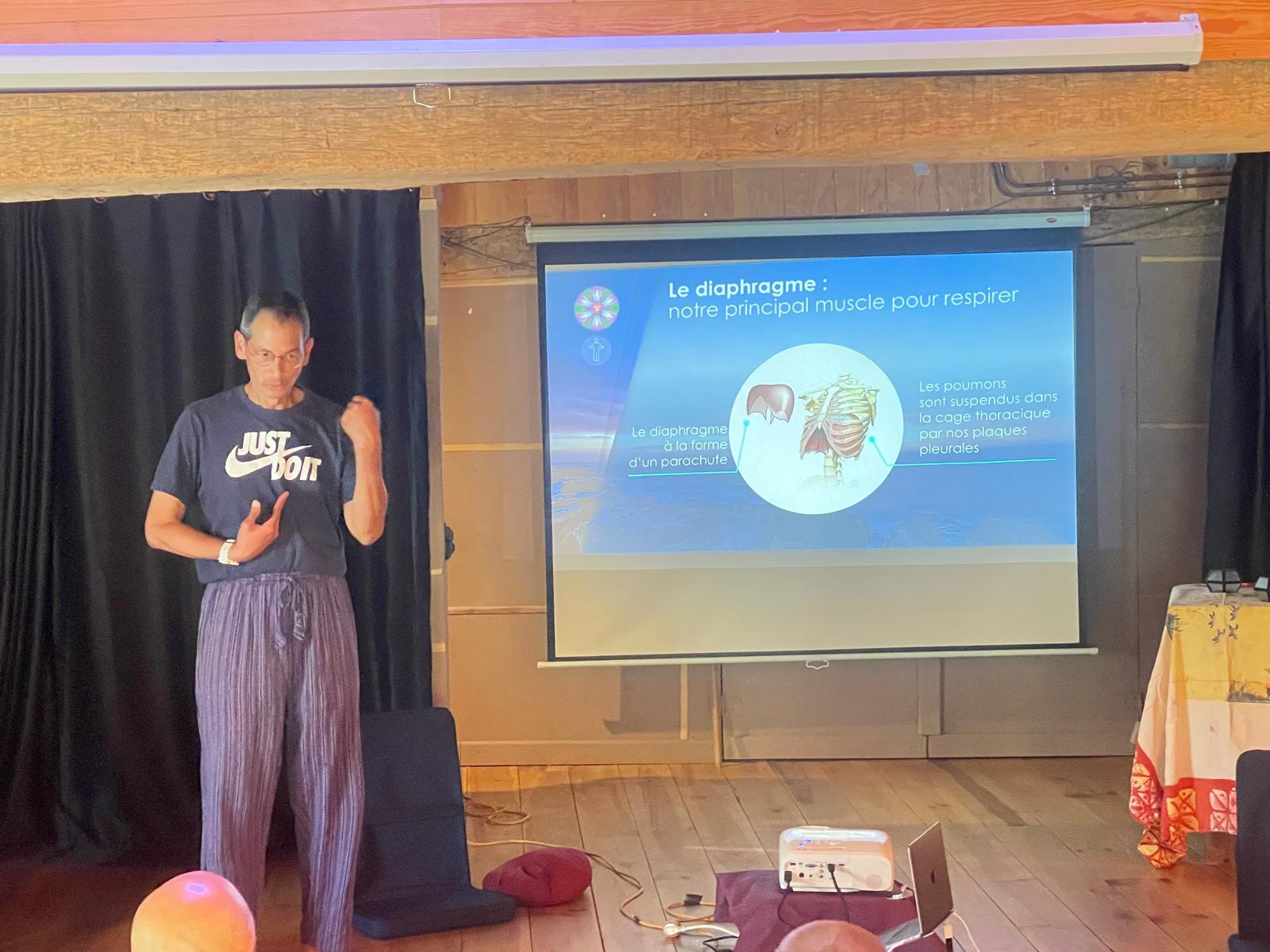
Breathing practices have been used for thousands of years across many cultures to improve physical health and wellbeing. These range from meditative practices that involve simply observing the breath, to those that regulate the breath such as pranayama practices found in yoga, box breathing, and others. A newer category of breath work therapy uses the breath as a way to enable clients to connect with emotions and memories which may have remained “stuck” or “unintegrated”; these are often the source of chronic anxiety and depression, as well as physical ailments such as asthma, migraines, and high blood pressure[1].
Transformational Breath (TBR) combines conscious, connected breath with gentle body mapping (similar to acupressure), movement, toning (vocal sound) and positive affirmations. This allows us to access and release emotions that have become “stuck”, or unresolved.
TBR was created over 50 years ago by Dr. Judith Kravitz. Through her observations of thousands of people, she realized that the WAY we breathe mirrors and reflects the WAY we move through life.
Today this breath practice is one of the fastest growing schools of breath in the world, and is offered in around 50 countries in the world and teaching materials have been translated into 10 languages.
The professional rigor of this approach is recognized by the Global Professional Breathworkers Alliance- which requires a minimum of 2 years training and 400 hours of training and practice.
A session typically lasts 1 ½ -2 hours, and can be offered invidually or in groups. There is time prior to the active breathing to connect with the client / group. The breath session itself typically lasts 1 hour, with 45 minutes of active breathing and 15 minutes for a time of quiet integration, although it can be as short as 40 minutes.
As the breath opens up, clients can truly “breathe freely” – and in turn allowing them to bring in more energy, more vitality and to open new possibilities to move forward in life.
I have access to practice spaces in Gex, France, and in Geneva – right near Gare Cornavin. For more information, see: https://transformationalbreath.com/
[1] Resolution of these is based on thousands of self-reported improvement. Scientific validation remains difficult due to lack of funding and the inherent challenge of conducting clinically controlled trials. See Science page on this website.